

Why We Exist
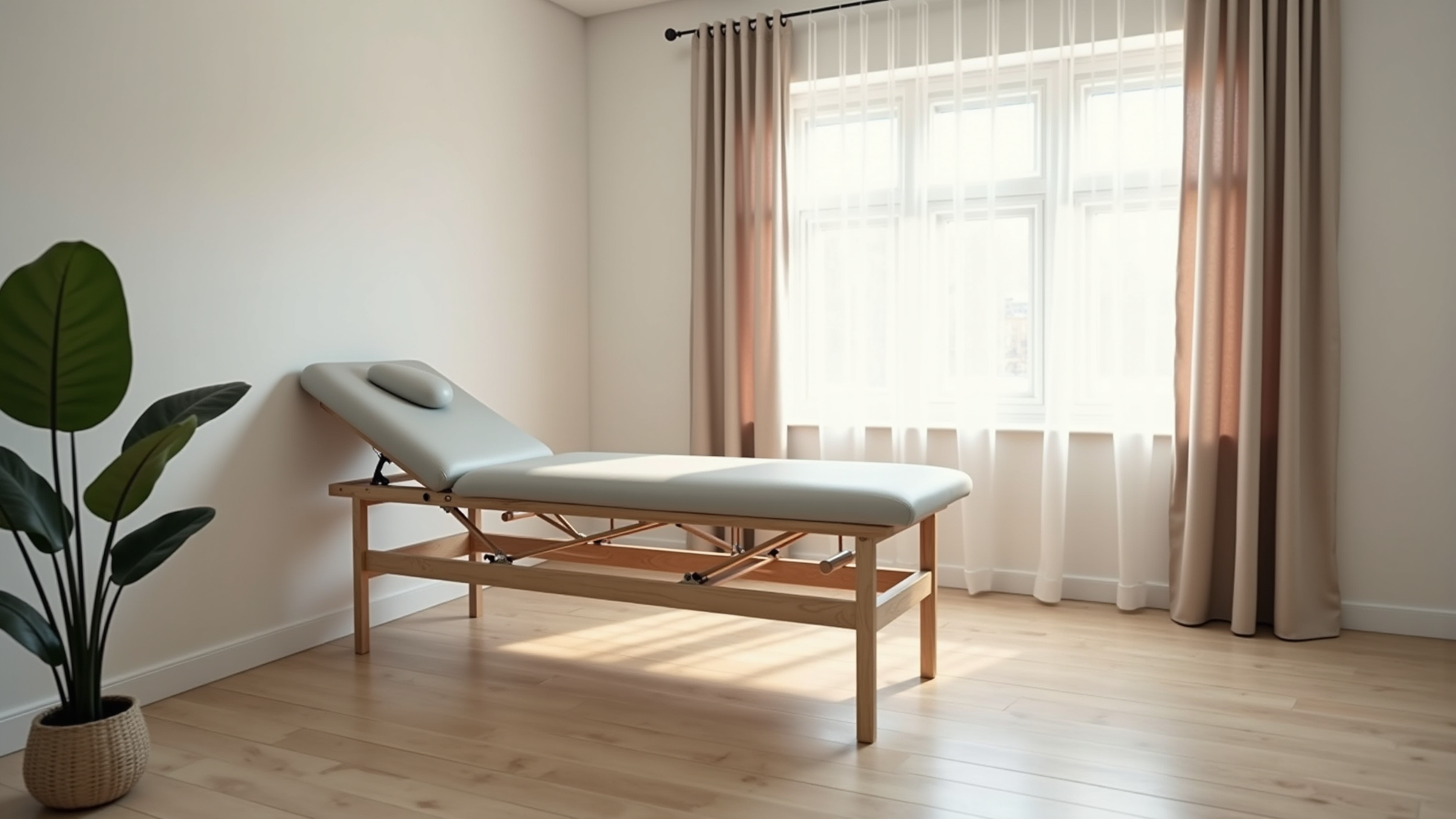
The Gap in Care is Real
If you’re living with Ehlers-Danlos syndrome (EDS) or any hypermobility, you already know how risky traditional PT can feel. Exercises that “should” help often leave you in more pain, flared up, or even injured.
If you’re a clinician, you know the feeling of standing in front of a hypermobile patient and wondering: Am I helping — or making this worse?
The truth is, EDS patients and their providers are both underserved.
-
Patients are left without safe, effective care.
-
Clinicians are left without training, forced to guess.
Chalela PT and the Finding Functional Foundations™ (FFF) were created to bridge that gap.
Our Approach
Discover how our comprehensive assessment and personalized treatment plans can support your journey to improved mobility and function.

Assessment & Evaluation
Initial Consultation
Our thorough assessment process ensures a deep understanding of your condition and sets the foundation for your personalized treatment plan.
Personalized Treatment
Tailored Care
Experience the benefits of a customized treatment plan designed to address your specific needs and promote your overall well-being with reduced pain flares.


Progress Tracking
Ongoing Support
We closely monitor your progress and provide continuous support to ensure that you achieve the best possible results based on what you unique body can and cannot do.
Services
Learn more about our services, both through health insurance covered treatment and cash pay clients for both in-clinic treatment and telehealth style therapies.
Physical Therapy
We offer in-person physical therapy at our location on Daniel Island, South Carolina. We specialize in treating EDS & CCI for patients all over the world, but also see local patients who need classic physical therapy.
Teleheatlh
We offer wellness treatments and health management consultations for EDS & CCI patients who are not able to travel to come see us in person or for post operative long-term management.
Frequently Asked Questions
- How does your approach differ from traditional PT? Traditional PT often chases symptoms - pain or discomfort in one joint after another. Or it may include exercises or manual therapy techniques that are too aggressive for the fragile connective tissue in EDS. We use a holistic strategy that helps people learn to use their bodies in ways to optimize function while avoiding pain and injury. It integrates body awareness and motor control to create a neuroplasticity approach that changes how people with EDS use their bodies. This improves long-term management more than addressing individual symptoms using a ‘whack-a-mole’ approach.
-Do you accept insurance? We do not file insurance on your behalf. You may still get reimbursed. We’ll provide a detailed superbill with all necessary codes, allowing you to submit for out-of-network reimbursement with your insurance. This offers flexibility while still getting expert care.
-Why are cash-based services better? At The Chalela Physical Therapy Institute, our goal is to provide the highest quality care without compromise. That’s why Susan Chalela, MPT, offers services on a cash-only basis for both in-person and telehealth visits. This model allows her to continue her roles in research, teaching, and clinical leadership—while still offering exceptional care. Here’s why many patients prefer cash-based services: ▸ More Personalized Care Without insurance restrictions, Susan can design a treatment plan that’s completely tailored to your needs. Sessions are one-on-one and are focused on what will help you most, not what insurance will approve. ▸ Faster Progress and Better Outcomes Insurance often limits treatment frequency or types of services. Cash-based care gives you access to comprehensive therapy that targets the root of the problem, often resulting in fewer total visits and faster recovery. ▸ No Insurance Red Tape There’s no need for referrals, pre-authorizations, or billing delays. That means less paperwork and more time spent on your actual care. ▸ You May Still Get Reimbursed We’ll provide a detailed superbill with all necessary codes so you can submit for out-of-network reimbursement with your insurance. This offers flexibility while still getting expert care. Choosing cash-based care allows Susan to provide focused, high-level treatment that meets your needs—without compromise.
-How long is your waitlist? Our waitlist is currently approximately 2-4 weeks long. However, if your schedule is flexible, you may be able to get in sooner due to cancellations.
-How are telehealth appointments different from in-person appointments? There are a few major differences between telehealth and in-person appointments. The first is that telehealth can be done from anywhere, so you do not need to be local to Charleston or travel to our office. We can even do telehealth with patients in other countries. Because we want to provide telehealth appointments regardless of location, these appointments are cash pay only. The treatment protocol is identical between in person and telehealth appointments, with two exceptions – the first is that telehealth does not allow for any hands on or soft-tissue work by our providers and the second is that you will need to have your own equipment to complete your exercises.
-What equipment will I need at home? Our clinic has an equipment list that can be easily ordered online for your personal use at home, to keep up with what you have learned at therapy in-between appointments or during telehealth visits. Once you are a patient and you have learned how to use the equipment, you will be given access to the list for you to order.
-Why should I do PT for CCI? Cranio-cervical instability ranges in severity from mild functional disability to life-threatening instability, and the path of treatment is determined in part by the level of symptom severity. Some cases of CCI require surgery to fuse the skull to the top of the spine to eliminate the instability that causes injury to the brainstem. This surgery has a difficult recovery, with possible but rare complications of hardware failure and a new onset of instability in the joints adjacent to the fusion. For patients who require this surgery, it can relieve many symptoms and improve their quality of life, but for most cases of CCI, our specialized physical therapy can provide the same relief without the risk of complications. As a result, many neurosurgeons require the majority of their CCI patients to try PT for a period of time before agreeing to a fusion. In our clinic, we have had great success in preventing the need for cranio-cervical fusions, and for those who have required fusions, PT can help prevent adjacent segmental instability from occurring. Our approach requires you to commit to working the protocol, completing your exercises between sessions, and giving your neck the time it requires to strengthen, so we encourage you to come in with a positive attitude and a willingness to be patient for the results and do your homework in-between sessions.
-How often do I need to be seen? Every patient is different, and we tailor our treatment to what each patient requires. Most of our patients come 1-2 times a week at first, with a gradual tapering as they gain strength and knowledge of how to continue this work at home. Some patients traveling from out of town will complete a single session to a few sessions with us consecutively while they are in-town and continue on their own or via telehealth.
-How do I cancel an appointment? We understand life happens and appointments need to be canceled or rescheduled! We do also have a waitlist and want to ensure as many patients as possible are able to be seen. As such, we have a very strict cancellation policy, but are always understanding of emergencies and illnesses. If you need to cancel an appointment, please text us as soon as possible at 843-364-3213 and let us know your reason for cancellation. Read our Cancellation Policy.
-What is your cancellation policy? At The Chalela Physical Therapy Institute, we take cancellations and no-shows seriously. Read our Cancellation Policy. Your consistency in attending appointments plays a critical role in your progress and outcomes. When appointments are missed without adequate notice, it impacts not just your care—but also the availability for others who need treatment. Cancellation Policy Overview: Cancel with Notice: You must cancel at least two business days in advance to avoid a fee. Example: Monday appointments must be canceled by 5 PM Thursday. Late Cancellation Fee: Appointments canceled with less than two business days’ notice, including for illness, incur a $50 cancellation fee. No-Show Fee: Missed appointments without notice (“no-shows”) will be charged the full session fee of $175. Important Notes: A credit card is required to be kept on file for all patients to cover any late fees or missed appointment charges. Cancellation and no-show fees are not covered by insurance and must be paid out-of-pocket. If you accrue 3 cancellations in a 30-day period or 3 no-shows total, your care will be discontinued and you will be asked to seek physical therapy services elsewhere. Payment is required at the time of service for all cash-pay and telehealth patients. Insurance patients must pay applicable copays, coinsurance, and charges for any add-on services (e.g., laser or dry needling). A Note on Fluctuating Symptoms: Your pain may increase or decrease over time, but this is not a reason to skip scheduled therapy. If you’re feeling worse, we can adjust your treatment. If you’re feeling better, we can modify your care plan—but please attend your session or cancel within the policy window. Why It Matters: When a session is missed: You lose valuable treatment time. Your therapist loses productivity and preparation time. Another patient misses an opportunity to be seen sooner. We appreciate your understanding and cooperation. If you have any questions, please contact our office team.
-Do you do hands-on therapy? Traditional hands-on therapy can be harmful to EDS patients due to weak collagen and the unique nature of the condition. The hallmark of hEDS is laxity in the ligaments that are meant to stabilize joints correctly. Because these ligaments are too loose, the secondary stabilizers – muscles – are often in spasm in an attempt to stabilize hypermobile joints. Traditional PT would use hands-on techniques to reduce the spasm, but unless something else is stabilizing those joints, doing so can cause further injury to ligaments – and, especially in cases of the spine, potential damage to the nervous system. Because of this, we focus first on strengthening the deepest levels of muscle to help maintain proper alignment of the joints with limited hands on work. When we do hands-on work, it is with the knowledge and expertise to do so safely. We find this approach to be successful in long-term pain reduction and in the reduction of other symptoms while protecting joints from further damage.
-What should I expect at my first appointment? During the first appointment, we will be completing a full evaluation – looking at your medical and surgical history, your current level of functioning, the impact your conditions are having on your life, and the severity of your hypermobility. From there, we start working from the ground-up…literally. Even if your chief complaint is your head, we start our work at the feet as every level of alignment is affected by the levels below it. It is impossible to attain proper cervical alignment if your back isn’t in proper alignment which can be caused by your pelvis being out of proper alignment which can be caused by your knees being out of proper alignment…and so on. At this appointment, we will begin the process of determining what outside supports (orthotics, braces, etc.) will aid in our work together. From there, we will work with you to outline your treatment goals so we can get to work! If you plan on using insurance to pay for your therapy, much of your initial evaluation will be geared toward questions insurance requires us to ask in order to approve and cover you for treatment. If you plan on coming in-person regularly, that is fine! However, if you are just in town for a limited period of time and want to maximize your initial evaluation before you transition to telehealth, or just as a one-off, we recommend using self-pay and forgoing insurance for your appointment.
-I suspect I have EDS or CCI. Will you be able to diagnose me? EDS and CCI are both medical conditions that require a physician to officially diagnose, so we are not able to provide an official diagnosis through our work with you, though we can often help point you in the right direction for who to see to obtain a diagnosis. For an EDS diagnosis, we recommend seeing a geneticist who can test for the known EDS genes and clinically diagnose those types without known genes, like hypermobile EDS. For a CCI evaluation, we recommend seeing a knowledgeable neurosurgeon who will order the type of imagining needed for diagnosis. Both of these diagnosis journeys can take time, and since physical therapy is often the recommended first line of treatment for both, we encourage you to start working with us while you go through that process.
-Can I see you for regular PT if I do not have EDS or CCI? We are a specialty practice that only sees patients who have either EDS or CCI, or are hypermobile and need PT for hypermobility-related concerns. If you are in need of regular PT and do not have any of these conditions, please talk to your doctor about where they recommend you receive treatment for your physical therapy needs.